Stirling Castle commands the skyline from its volcanic crag, guarding the farthest downstream crossing of the River Forth. Its position at the meeting point of the Highlands and Lowlands has made it one of the most fought-over fortresses in British history.
The Key to Scotland
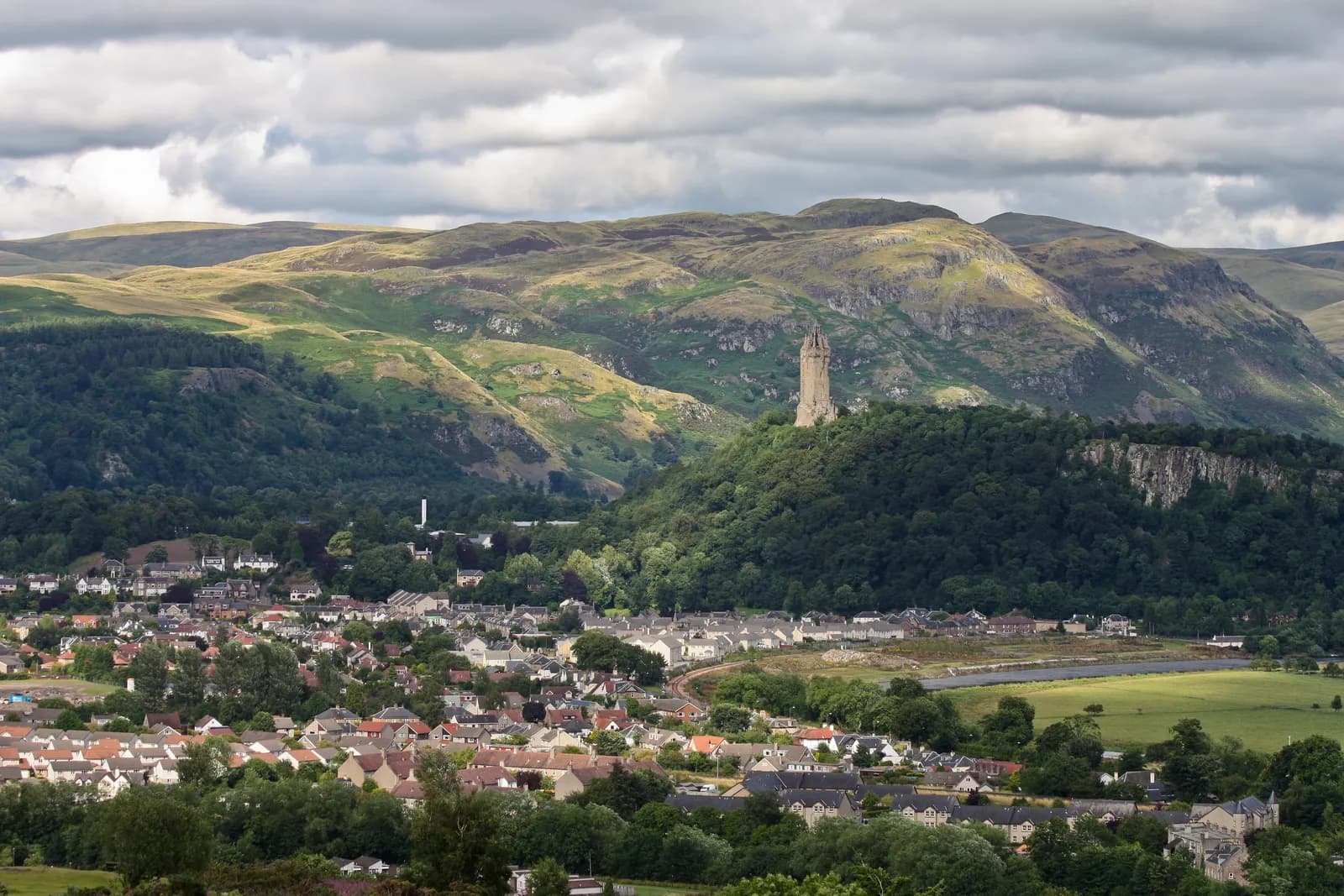
The castle sits atop an intrusive crag, surrounded on three sides by steep cliffs. Historic Environment Scotland notes that its location has been likened to "a huge brooch clasping Highlands and Lowlands together." Until the 1890s, it guarded the lowest bridgeable point on the River Forth, dominating major east-west and north-south routes. This strategic position led to the saying that whoever held Stirling held the key to Scotland.
Royal Beginnings
The first record of a royal presence dates to around 1110, when King Alexander I dedicated a chapel at Stirling Castle. He died there in 1124. Under David I, Stirling became a royal burgh and the castle developed into an important administrative centre. King William I formed a deer park to the south-west and died at the castle in 1214. Richard I of England formally returned the fortress to Scottish control in 1189 following its surrender under the Treaty of Falaise in 1174.
Wars of Independence
Stirling Castle changed hands repeatedly during the Wars of Scottish Independence. Edward I of England occupied it in 1296, but Andrew Moray and William Wallace dislodged the English garrison after their victory at the Battle of Stirling Bridge in 1297. The castle fell back to English control following the Battle of Falkirk in 1298.
In 1304, Edward I besieged the castle with at least 17 siege engines, including a large trebuchet named "Warwolf" that destroyed the gatehouse. The Scottish garrison under William Oliphant surrendered on 20 July 1304. By 1313, Stirling was the last castle in Scottish hands still held by the English. Sir Philip Mowbray, the English commander, agreed to surrender if not relieved within a year; this condition led directly to the Battle of Bannockburn on 23 June 1314. Robert Bruce's forces defeated Edward II's army, and Mowbray handed over the castle before changing sides. King Robert subsequently ordered the castle slighted to prevent reoccupation.
The English regained control by 1336, but Robert Stewart, the future King Robert II, retook it during a siege in 1341 and 1342.
The Stewart Dynasty
The earliest surviving parts of the castle date from the reigns of Robert II and Robert III in the late 14th century, including the foundations of the present north gate from the 1380s. In 1424, Stirling Castle formed part of the jointure of Joan Beaufort, wife of James I. Following James I's murder in 1437, Joan took refuge there with the young James II. In 1452, James II stabbed and killed William, 8th Earl of Douglas, within the castle walls.
James III was born at the castle and undertook works to the gardens and chapel royal. His wife, Margaret of Denmark, died there in 1486. James III himself died at the Battle of Sauchieburn in 1488, just south of the castle.
Renaissance Splendour
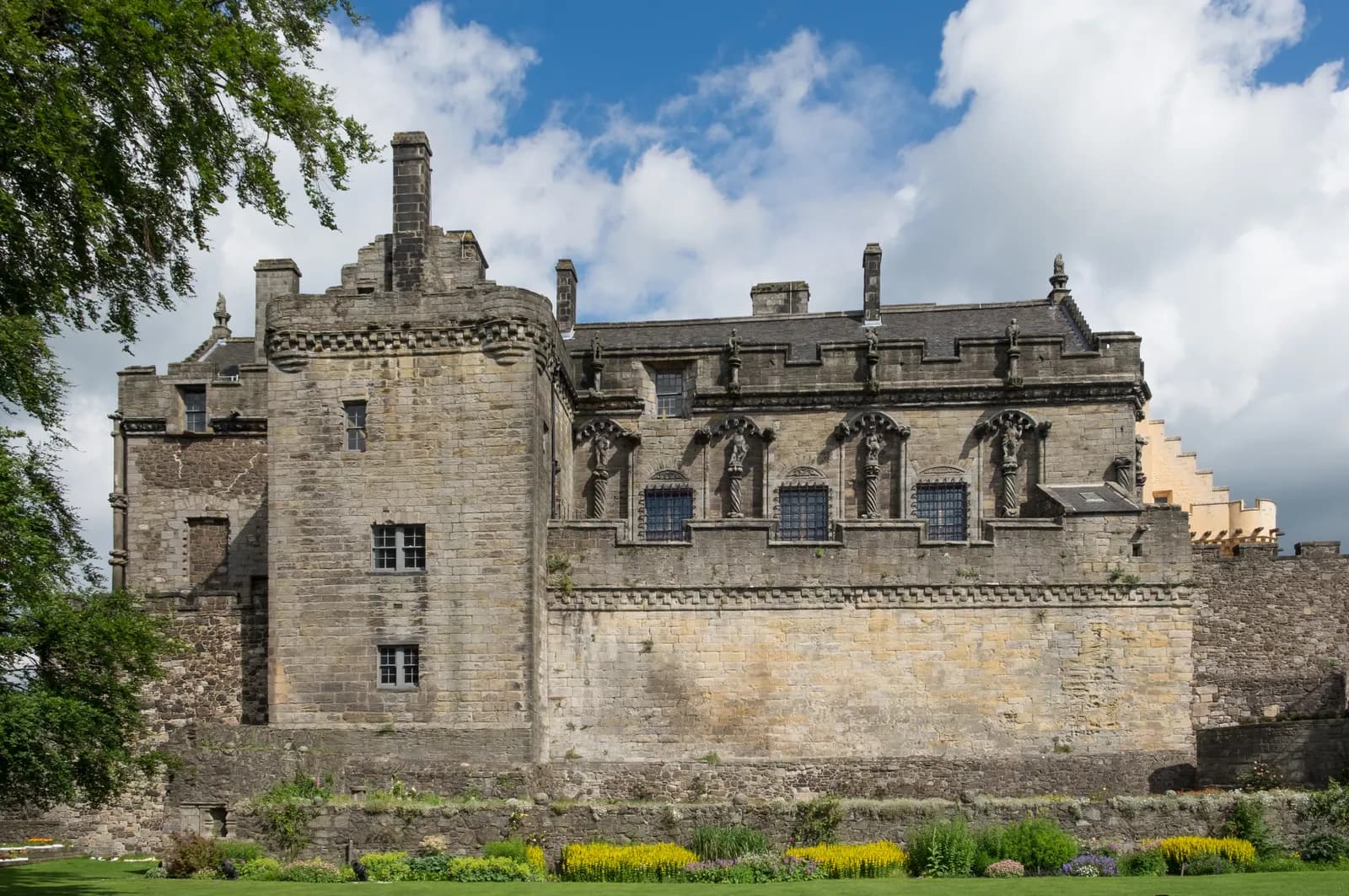
Most of the present buildings were constructed between 1490 and 1600. James IV built the King's Old Building in 1496, the Great Hall, completed in 1503, and the Forework, an imposing defensive entrance derived from French military architecture. He also renovated the chapel royal.
James V was crowned in the chapel royal and grew up within the castle walls. He commissioned the Royal Palace, built around 1540 and finished after his death in 1542 under the direction of his widow, Mary of Guise. His infant daughter, Mary, Queen of Scots, was brought to Stirling Castle for safety in July 1543 and crowned in the chapel royal on 9 September 1543.
Mary returned to Scotland in 1561 and visited the castle frequently. Her son, James VI, was baptised there in December 1566 with celebrations that included fireworks and a masque. He was crowned in the nearby Church of the Holy Rude in July 1567 and spent his childhood at the castle. The present Chapel Royal was constructed in just seven months for the baptism of his son, Prince Henry, in 1594. It was one of the first Protestant kirks in Scotland and the last royal building erected at the castle.
From Royal Residence to Military Garrison
After the Union of the Crowns in 1603, Stirling's role as a royal residence declined and the castle became primarily a military centre. Charles II was the last reigning monarch to stay there, in 1650. General Monck laid siege on 6 August 1651, and the garrison surrendered on 14 August. Damage from this siege is still visible on the church and Great Hall.
The castle was used as a prison for Covenanters after the Restoration. A powder magazine was built in the gardens, and a formal garrison was installed from 1685. During the Jacobite rising of 1715, government troops occupied the fortress. In the rising of 1745, Charles Edward Stuart unsuccessfully attempted to take the castle in January 1746; the governor, William Blakeney, refused to capitulate.
Barracks and Restoration
From 1800, the War Office owned the castle and used it as a barracks. The Great Hall became an accommodation block, the Chapel Royal a lecture theatre and dining hall, the King's Old Building an infirmary, and the Royal Palace the officers' mess. New buildings, including a prison and powder magazine, were added to the Nether Bailey in 1810. In 1881, it became the depot for the Argyll and Sutherland Highlanders.
Today, Stirling Castle is a Scheduled Ancient Monument managed by Historic Environment Scotland. A ten-year, £12 million programme of research and re-presentation was completed in summer 2011, with the Royal Palace restored between 2001 and 2011. The project included the recreation of The Hunt of the Unicorn tapestries; four replicas now hang in the restored Queen's Presence Chamber. The tapestries were researched by weavers who inspected the 15th-century originals at The Cloisters in New York City.
Visiting Stirling Castle
The castle is open to visitors daily, with seasonal hours. Attractions include the Great Hall, the largest medieval banqueting hall ever built in Scotland, measuring 138 by 47 feet; the Royal Palace, refurbished to reflect the era of James V; the Chapel Royal; the Stirling Heads Gallery, displaying metre-wide 16th-century oak medallions; and the Castle Exhibition, which explores medieval burials found beneath a lost royal chapel. Visitors can also walk the Queen Anne Gardens and take in views across Stirling to the King's Knot and Royal Park.