A 500-Year-Old Scottish Football Heads to Miami for the World Cup
More than four decades ago, renovation work at Stirling Castle led to one of the most extraordinary sporting discoveries in Scotland’s history.
Hidden behind oak panelling in the roof structure of the Queen’s Chamber was a small leather ball, concealed for centuries in one of the most important royal residences in the country.
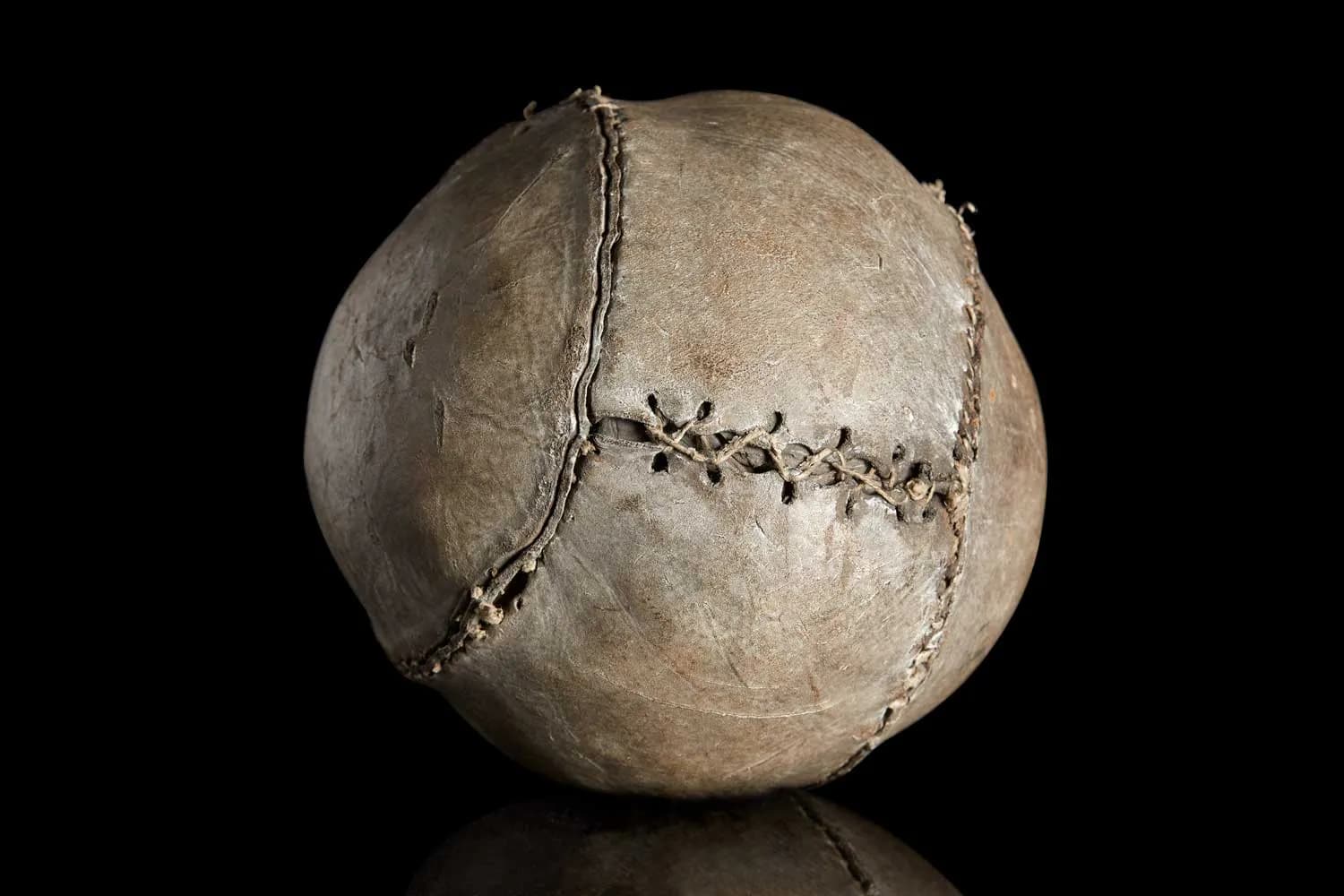
The object, measuring around 14 to 16 centimetres in diameter, was made from stitched leather and inflated using a pig’s bladder. It has been dated to the 16th century, around 1540 to 1570, making it widely recognised as the oldest surviving football in the world.
Its exact use has been debated by historians. The Stirling Smith Museum and researchers at the Scottish Football Museum have linked it to football, noting similarities with descriptions of balls used in games recorded at Carlisle Castle in 1568. The National Museum of Scotland has previously suggested it may have been used in an Italian game similar to pallone, partly because of its relatively small size.
Whatever its precise sporting purpose, the ball remains an extraordinary physical link to Scotland’s early playing culture.
Stirling Castle was a principal residence of the Stewart monarchs during the 15th and 16th centuries, and records show that football was already known in the royal household.
In 1497, James IV paid two shillings for footballs, with palace accounts recording the purchase of “fut ballis to the King.” The castle’s Great Hall, built during his reign, would have offered ample space for games, recreation and courtly life.
The discovery of the ball within the Queen’s Chamber offers a rare glimpse into the everyday world of the royal apartments. It may have belonged to a child, a member of the household, or someone connected to the court. It may simply have been stored and forgotten.
Its survival, however, is remarkable.
Before leaving Scotland, the Stirling Smith Art Gallery and Museum hosted a special farewell ceremony at 11am on Friday 19 June.
The event gave visitors a final chance to see this internationally significant object on home soil before it crossed the Atlantic. For Stirling, it was a proud send-off for an artefact that belongs not only to the city, but to the wider story of Scottish and world football.
Upon arrival in the United States, the Stirling treasure is going on public display at the Coral Gables Museum in Miami.
It will be on view from 20 to 26 June as part of a World Cup exhibition exploring football, culture and international connections.
The journey marks a major moment for the nearly 500-year-old ball. After centuries hidden in Stirling Castle and many years preserved by The Smith, it is now being shared with an international audience during the biggest football tournament in the world.
The ball is also set to attend the Brazil v Scotland World Cup match on 24 June 2026.
For Scotland, the fixture is already a major sporting occasion. For Stirling, it carries an additional layer of history. A ball linked to Scotland’s early footballing past will be present as the modern national team takes to the world stage.
It is believed to be the first time in the object’s long history that it will attend a World Cup fixture.
The Stirling Castle football was discovered behind oak panelling in the Queen’s Chamber at Stirling Castle.
It dates from the 16th century, around 1540 to 1570.
It is made from stitched leather and was originally inflated using a pig’s bladder.
It is held by the Stirling Smith Art Gallery and Museum.
The Smith hosted a farewell ceremony on Friday 19 June before the ball left Scotland.
The ball will be displayed at the Coral Gables Museum in Miami from 20 to 26 June.
It is also set to attend the Brazil v Scotland World Cup match on 24 June 2026.
The journey to Miami gives the Stirling football a new chapter, but its importance was already clear long before this World Cup appearance.
Scotland’s contribution to modern football is well documented. The country gave the world the first international match, helped shape the organised game, and developed a style of play that influenced football globally.
The Stirling Castle ball suggests that Scotland’s love of the game runs even deeper.
Long before codified rules, professional clubs and international tournaments, a leather ball was being played with in and around one of Scotland’s great royal castles.
Now, almost 500 years later, that same object is travelling from Stirling to Miami, linking the earliest days of the game with football’s biggest modern stage.
The world’s oldest football. Image credit: Stirling Smith Art Gallery and Museum.