The Church of the Holy Rude has stood near Stirling Castle for nearly nine centuries, surviving fire, siege, and religious division to remain one of Scotland's most significant parish churches. It is one of only three churches in Britain still in regular use that have hosted a royal coronation.
Origins and Rebuilding The church was founded in 1129 during the reign of David I. The earliest part of the present building, however, dates from the 15th century, following a fire in 1405 that destroyed much of the earlier structure. Construction of the nave had begun by 1414, and its stone vault was completed between 1440 and 1480. The semi-octagonal apse was finished between 1507 and 1555, while the chancel and tower were added in the 16th century, with the chancel completed around 1530.
The Coronation of James VI The church's place in royal history was secured on 29 July 1567, when the infant James VI was crowned King of Scots following the forced abdication of his mother, Mary, Queen of Scots. The sermon was preached by John Knox, the leading figure of the Scottish Reformation.
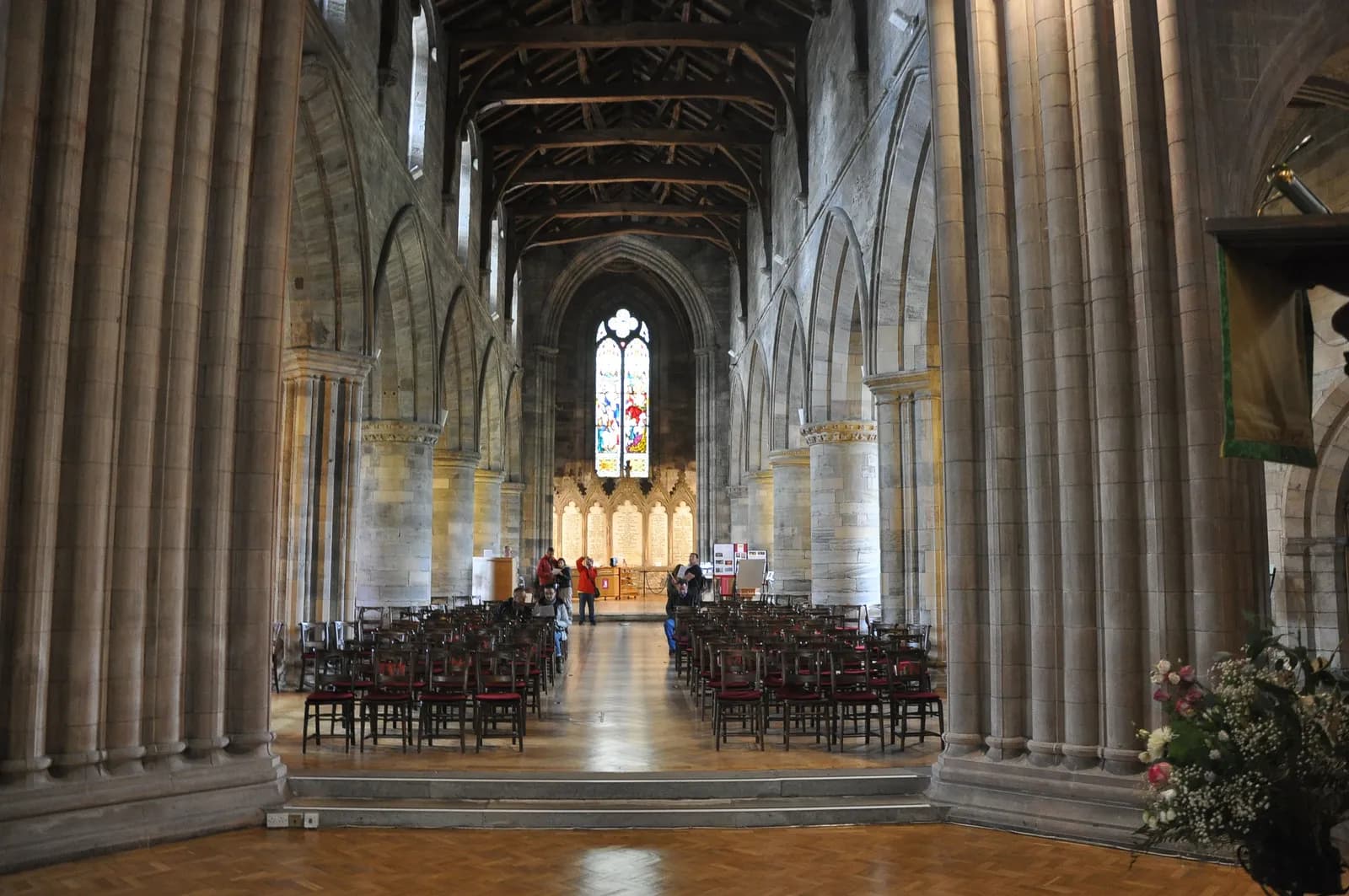
Reformation and Division John Knox's presence at the coronation underscored the church's central role in the Scottish Reformation. In the centuries that followed, theological disputes left a physical mark on the building: from 1656 to 1936, a dividing wall separated the nave from the choir, allowing two congregations to worship separately. The wall was removed between 1935 and 1940, and the 1940 restoration re-exposed the medieval oak-beamed roof, one of the few such timber roofs to survive in Scotland.
Scars of the Siege The church still bears visible scars from the 1651 Siege of Stirling Castle. Musket-shot damage can be seen on the exterior walls, a reminder of the military struggles that once surrounded it.
The Church Today The Holy Rude remains an active parish church of the Church of Scotland. In 2023, the congregation partnered with Stirling District Tourism Ltd to promote the site as a visitor destination, emphasising its architectural and royal heritage alongside its continuing religious life.