Stirling: The Key to the Kingdom
Stirling has long occupied a position of extraordinary strategic importance in Scotland. The city sits at the lowest crossing point of the River Forth, where the Highlands meet the Lowlands, and control of Stirling effectively meant control of the kingdom. This geographical reality made the surrounding landscape the setting for two of the most consequential battles in Scottish history.
The Battle of Stirling Bridge, 11 September 1297
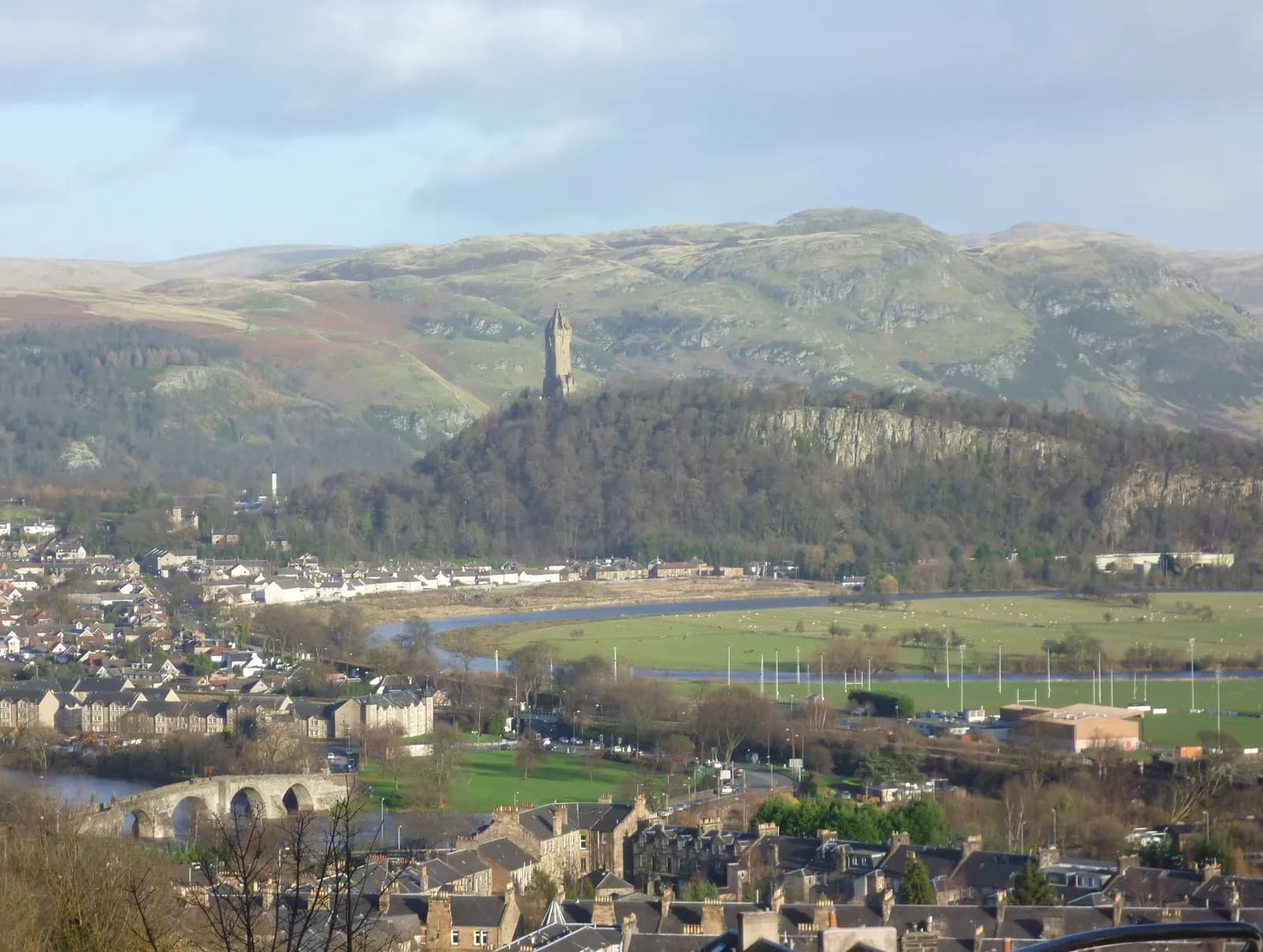
On 11 September 1297, Scottish forces led by William Wallace and Andrew Moray confronted an English army under John de Warenne, 6th Earl of Surrey, near the wooden bridge that then crossed the River Forth. The original bridge stood approximately 180 yards upstream from the present 15th-century stone structure, with fighting concentrated along an earthen causeway leading from Abbey Craig to the north bank. The bridge was narrow enough to permit only two horsemen to cross abreast, a constraint the Scottish commanders exploited with devastating effect.
Wallace and Moray waited until a substantial portion of the English force, estimated at around 2,000 men, had crossed before launching their attack. The English troops found themselves trapped in the loop of the river, unable to retreat or receive reinforcements. The Scots secured a decisive victory; English casualties included approximately 100 cavalry and 5,000 infantry, and Hugh de Cressingham, the English treasurer in Scotland, was killed. Andrew Moray was mortally wounded during the fighting, a significant loss for the Scottish cause.
The Earl of Surrey ordered the destruction of the bridge and retreated, leaving Stirling Castle isolated and the Scottish Lowlands open to rebel forces. In the aftermath, Wallace was appointed Guardian of the Kingdom of Scotland and commander of its army. The victory demonstrated that a well-led Scottish force could defeat a larger English army, providing a critical boost to morale and resistance.
The Battle of Bannockburn, 23–24 June 1314
Seventeen years later, on 23 and 24 June 1314, a second decisive encounter took place on ground south of Stirling. Robert the Bruce, by then King Robert I, led a Scottish army against King Edward II, who had marched north to relieve the besieged Stirling Castle. The exact location remains a matter of scholarly debate, with modern historians suggesting an area south of Balquhiderock Wood known as the Dryfield, or the Carse of Balquhiderock to the north.
On the first day of fighting, Robert the Bruce killed the English knight Henry de Bohun in single combat, an episode that has become one of the most celebrated moments of the battle. On the second day, the Scottish army advanced from New Park in tight defensive formations known as schiltrons, squares of infantry armed with long pikes. English longbowmen were dispersed by Scottish cavalry, and the English mounted knights were hemmed in against the Bannock Burn, unable to manoeuvre.
The result was a catastrophic defeat for England. Approximately 700 knights and men-at-arms were killed, along with an estimated 15,000 to 20,000 infantry killed or drowned. Notable English dead included Gilbert de Clare, 8th Earl of Gloucester, and Robert de Clifford, 1st Baron Clifford. Scottish casualties were comparatively light; only two Scottish knights were killed. The Earl of Hereford was among those captured.
From Battlefield to Treaty
The victory at Bannockburn proved to be the turning point of the First War of Scottish Independence. Stirling Castle surrendered, and other English strongholds followed. The defeat opened northern England to Scottish raids and created the political conditions that eventually produced the Treaty of Edinburgh–Northampton in 1328. That treaty formally recognised Scotland's independence and Robert the Bruce as its rightful king. The battle also demonstrated the effectiveness of disciplined infantry tactics against heavy cavalry, an innovation that influenced medieval warfare across Europe.
What Remains Today
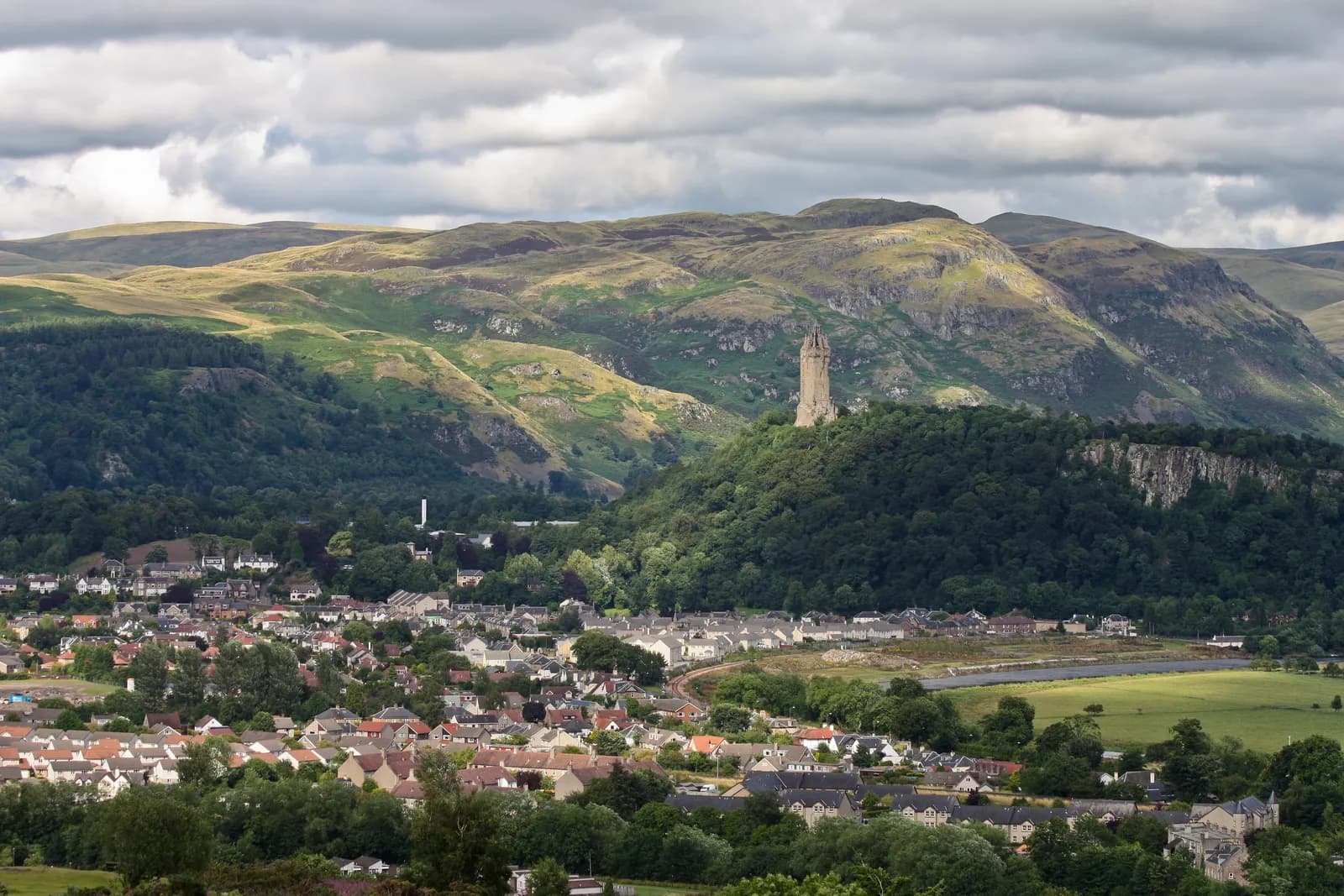
Both battlefields are registered historic sites, and their locations remain identifiable in the Stirling landscape. The site of Stirling Bridge is designated battlefield BTL28, while Bannockburn is registered as BTL4. The National Wallace Monument stands on Abbey Craig, overlooking the ground where Wallace and Moray waited for the English advance. At Bannockburn, a modern monument and a statue of Robert the Bruce by the sculptor Pilkington Jackson mark the field where Scottish independence was effectively secured. These sites continue to draw visitors and serve as tangible reminders of the battles that shaped the nation.