The Strategic Bottleneck
Long before the age of the motor car, Stirling already had a congestion problem. The city's position as the lowest bridging point of the River Forth before it broadens towards the Firth of Forth made it an unavoidable chokepoint for one of Scotland's most vital industries: the cattle trade. From the mid-18th century until the arrival of the railways, tens of thousands of Highland cattle poured through Stirling each year, turning the ancient streets into what historians now recognise as Britain's first documented traffic jams.
The Scale of the Trade
Historical records suggest that by the 18th century, up to 80,000 cattle were driven south from Scotland annually. In 1723 alone, over 30,000 Scottish cattle were sold into English markets. These animals travelled along a network of drove roads, paths typically 40 to 90 feet wide that accommodated large herds moving together.
Three times each year, on the second Tuesdays of August, September, and October, the Falkirk Tryst brought the trade to its peak. The Tryst, held at Stenhousemuir from 1785 until the late 19th century, became the largest cattle market in Britain. Highland drovers would travel for weeks, some driving their herds as far as Carlisle or even London's Smithfield Market.
The Auld Brig: Gateway to the South
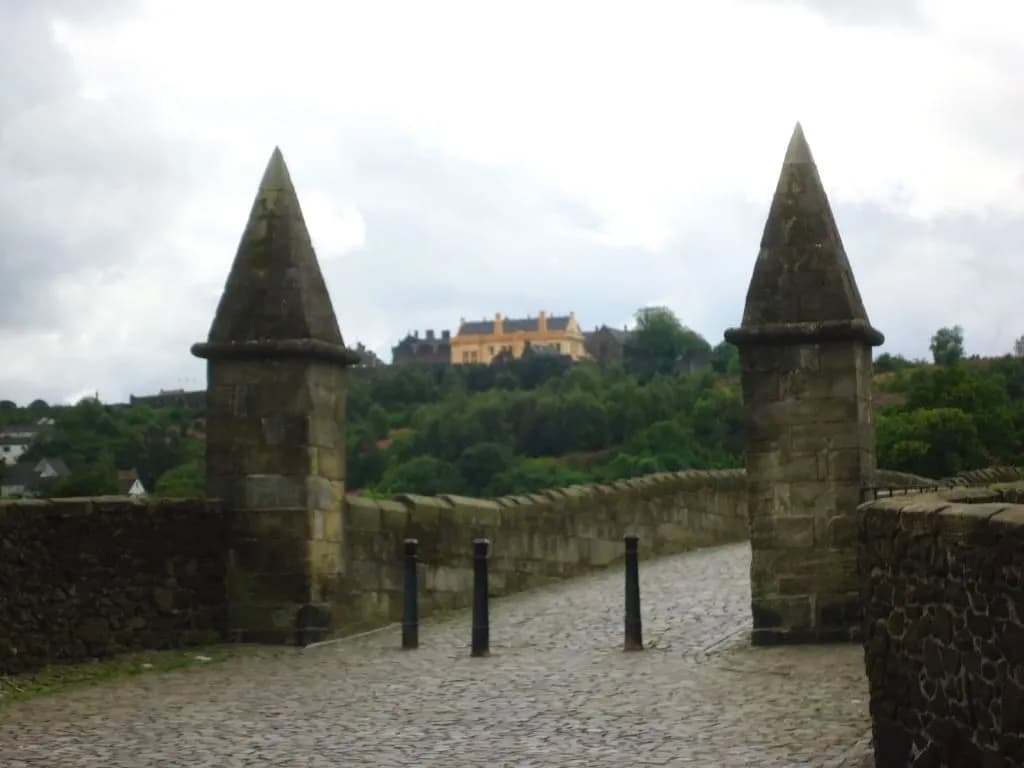
The Stirling Old Bridge, constructed around 1500, served as the critical crossing point for this immense traffic. Scottish drovers, who typically bought cattle outright before driving them to southern markets, were compelled to funnel their herds across this narrow stone structure. Tolls were levied on goods crossing the bridge, with excise men operating from a covered booth in the centre.
Thomas Gisbourne, writing in his "Essay on Agriculture" in 1849, described the Falkirk Tryst as "a scene to which Great Britain, perhaps even the whole world, does not afford a parallel." The Tryst was not merely an economic event; it was a cultural crossroads where Highland drovers with their distinctive dogs met Lowland merchants and English buyers.
Britain's First Recorded Tailback
The congestion reached extraordinary levels. Local historical records document one remarkable incident: a four-mile long tailback of livestock stretching from St. Ninians to Bridge of Allan. The cause was a dispute involving a toll collector at St. Ninians, demonstrating how a single bottleneck could paralyse the entire system.
To put this in perspective, a four-mile queue of cattle would have contained thousands of animals, accompanied by drovers, dogs, and attendant traders. The economic importance of the trade to 18th-century Scotland meant that such delays had serious financial consequences for all involved.
The Economic Engine
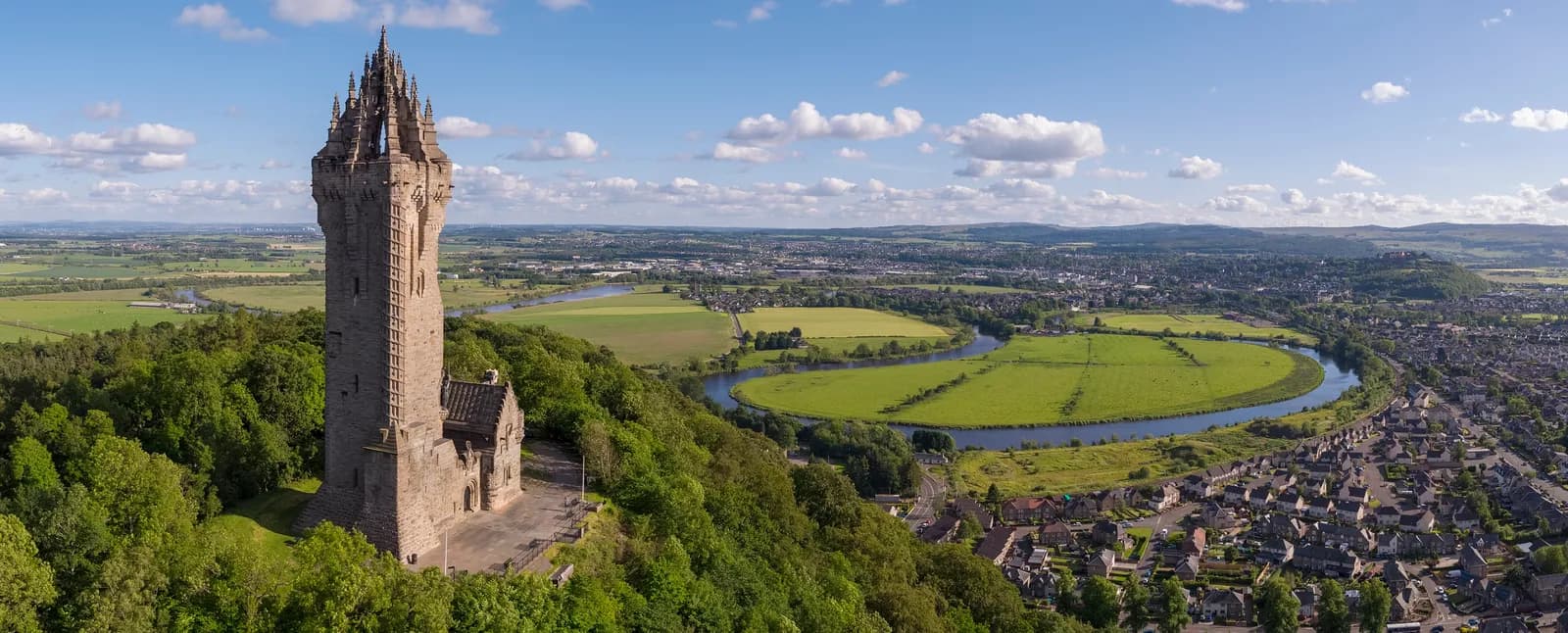
The cattle trade was important to the Scottish economy throughout the 18th century, and Stirling prospered accordingly. The city's port supported foreign trade with the Low Countries, particularly Bruges and Veere, complementing the overland droving industry. Stirling Castle, overlooking the crossing, had long controlled access to this vital route, underscoring its strategic significance.
The trade followed a seasonal rhythm tied to agricultural cycles. Autumn sales allowed English buyers to fatten cattle over winter, whilst the three annual Trysts provided regular opportunities for commerce. Some drovers became substantial figures in Scottish business, operating across international markets.
The Railway Revolution
The arrival of railways in Stirling in 1848 brought an abrupt end to this centuries-old tradition. Cattle trains were established from Aberdeen to London from 1850 onwards, rendering the drove roads obsolete. The Trysts continued into the late 19th century but gradually declined as rail transport proved faster, cheaper, and more reliable.
The last recorded large-scale cattle drove over the Corrieyairack Pass, a key Highland route, occurred in 1906. By then, Stirling's streets had long since cleared of the herds that once dominated them. The Stirling Old Bridge, designated a scheduled monument in 1921, was closed to wheeled traffic in 1833 when an adjacent new road bridge opened, though it remained in use for pedestrians.
What Remains Today
Visitors to Stirling can still walk across the Auld Brig, now a pedestrian-only structure. The Old Bridge provides a physical connection to the era when this single crossing controlled the flow of Scottish commerce. The battle plaque on the bridge commemorates earlier conflicts, but the stone structure itself bears witness to the economic battles of the droving era.
Stirling's Old Town, including Broad Street and Castle Wynd, follows the routes that drovers and their herds once traversed. The narrow medieval street pattern that frustrates modern motorists was designed for an earlier age of transport, one measured in hooves rather than horsepower.
What Is Confirmed
The research confirms that up to 80,000 cattle were driven annually in the 18th century; the Falkirk Tryst operated from 1785; the Stirling Old Bridge dates from c. 1500; and railways arrived in 1848. The four-mile tailback record is documented in local historical tradition.
What Is Unclear
The original primary source document for the four-mile tailback incident was not directly accessed; attribution relies on secondary citations. The exact economic value of the trade to Stirling specifically, as opposed to Scotland generally, is not clearly documented in available sources.